Showing posts with label Oscar Project. Show all posts

Sunday, December 23, 2018

1952: An American in Paris

This is another movie that I watched first when I made my way through the AFI Top 100 films. At the time, I wrote that I was unimpressed. I still feel the same way.

I have the disadvantage of having watched Singin' in the Rain before An American in Paris. Singin' came out a year after American. That's my problem. There were very few moments watching this that I wasn't thinking about and wishing I were rather watching Singin'.

Gene Kelly as Jerry Mulligan is great (he plays himself, so yeah. I mean more of his singing and dancing). The music is great (you can't beat Gershwin).  As so many musicals are, the musical numbers are the tiles and everything else is the grout keeping the musical numbers together. I didn't enjoy watching the grout. I liked the grout in Singin' in the Rain.

I got a bit excited to watching this movie during the opening scene. It's excellent. I noticed (with no surprise) in the opening credits that Gene Kelly was the choreographer. The opening scene is of him getting out of bed in a room that barely fits the bed. He puts the bed away and gets out everything else. It's a well choreographed and beautiful scene, even though it isn't a dance number. Every move works with every line of dialogue. There isn't anything else like it in the movie, however.

The closest is when Mulligan's fellow expat starving artist, pianist Adam Cook, is sitting between Mulligan and another man talking about the girls they are seeing. The only one who knows it's the same girl is Cook. Cook's "choreography" as he takes in the scene is a lot of fun. The scene is at around 1:18 if you have it and want to take a look.

I also liked this line, spoken by Grant about American students studying in Paris. "They're always making profound observations they've overheard."

There are many things to like. You could probably edit this movie down to a good, solid 20 minutes. That 20 puts it above a bunch of other movies. The other hour and 20 minutes puts it below the rest. I'm going to spend a week in Paris this summer. I enjoyed watching the different views of Paris, and that includes the surreal version during the closing number, though it goes on 15 minutes too long (it's about 17 minutes). I guess that's how I made it through the rest of the movie. It's pretty?

I thought it was interesting that the opening credits that they give credit to "Gene Kelley's painting's by Gene Grant." Shouldn't they have given credit to his character? Aren't they Jerry Mulligan's paintings?

NEXT WEEK: 1953 - The Greatest Show on Earth

Oscar Project Rankings:


  1. Casablanca (1944)
  2. It Happened One Night (1935)
  3. Gentleman's Agreement (1948)
  4. The Best Years of Our Lives (1947)
  5. All Quiet on the Western Front (1931)
  6. Rebecca (1941) 
  7. All About Eve (1951)
  8. Mutiny on the Bounty (1936)
  9. You Can't Take It With You (1939) 
  10. Gone With the Wind (1940) 
  11. Hamlet (1949)
  12. An American in Paris (1953)
  13. The Life of Emile Zola (1938)
  14. All the King's Men (1950)
  15. Grand Hotel (1933)
  16. Cimarron (1932)
  17. The Great Ziegfeld (1936)
  18. Broadway Melody (1930)
  19. The Lost Weekend (1946)
  20. Going My Way (1945)
  21. How Green Was My Valley (1942)
  22. Wings (1929)
  23. Mrs. Miniver (1943)
  24. Cavalcade (1934)


Tuesday, October 16, 2018

1951: All About Eve

You would think that I would be inclined to want to like a movie more that has a Civil War joke 11 minutes in. But there are some things that bug me about it. I really want to dislike All About Eve. But it's a really good movie.

So what don't I like? All About Eve is more about Broadway in 1951, but can be said about Hollywood today. They really love themselves. Just a few minutes into the movie, a room of about 50 people in the industry give a three minute long standing ovation to a young actress for previous accomplishments. It's just weird, and why I don't enjoy watching awards shows. I just don't like the entertainer circle jerk.

We're also in the height of overacting. I've seen the slow transition from silent movies up to here. Previous Oscar winners had a lot of that radio voice style of acting. They've been slowly building up to this melodramatic style. Every single line everyone says is said as if it's the line that explains the title. And with a movie about acting, All About Eve punches you in the face with it.

Funny note - this is what I wrote about it when I first saw it many years ago: "Is an extremely well acted movie which should be obvious to just that anybody that watches it, even a fool like me." I was a fool. Overacting bugs me.

And finally, the theme. The first four notes are basically Tara's theme from Gone With the Wind.

What's good? Everything else. It's a great script. The best line, I think, is Marilyn Monroe's line right after the "Fasten your seat belts" line:

"You won't bore him, honey. You won't even get a chance to talk."

NEXT WEEK: 1952 - An American in Paris

Oscar Project Rankings:


  1. Casablanca (1944)
  2. It Happened One Night (1935)
  3. Gentleman's Agreement (1948)
  4. The Best Years of Our Lives (1947)
  5. All Quiet on the Western Front (1931)
  6. Rebecca (1941) 
  7. All About Eve (1951)
  8. Mutiny on the Bounty (1936)
  9. You Can't Take It With You (1939) 
  10. Gone With the Wind (1940) 
  11. Hamlet (1949)
  12. The Life of Emile Zola (1938)
  13. All the King's Men (1950)
  14. Grand Hotel (1933)
  15. Cimarron (1932)
  16. The Great Ziegfeld (1936)
  17. Broadway Melody (1930)
  18. The Lost Weekend (1946)
  19. Going My Way (1945)
  20. How Green Was My Valley (1942)
  21. Wings (1929)
  22. Mrs. Miniver (1943)
  23. Cavalcade (1934)

Sunday, June 3, 2018

1950: All the King's Men

All the King's Men is about corruption in both people and politics. The message is a bit the same as in House of Cards in that everyone is bad or has the strong potential for bad except for  "the people." And it trying to appease "the people," anything goes.

That means that there isn't anybody to really cheer for. At the beginning, we see Willie Stark as the underdog. But once he gets to power he is corrupted. It's an abrupt change like a WWE heel turn.

Abrupt change was the theme I saw through the movie, but I also don't feel like that was the intention. There were several events that seemed pretty important that were glossed over. Characters changed. Events happened behind the scenes. To me, it seemed more like a pacing issue.

All The King's Men clocked in at a welcome 1:47. But it felt like a 2:30 movie in which a bunch of important scenes were cut out. I don't know enough about cinema in this time period to know if it was common to have many cut scenes, so I just don't know if that was why it was that way. Or perhaps they figured enough people knew the story due to the novel? I don't know.

This was OK. I appreciate the likely historical context of All the King's Men and how it laid the groundwork for similar political films. But other than that, it was OK. 


NEXT WEEK: 1951 - All About Eve

Oscar Project Rankings:


  1. Casablanca (1944)
  2. It Happened One Night (1935)
  3. Gentleman's Agreement (1948)
  4. The Best Years of Our Lives (1947)
  5. All Quiet on the Western Front (1931)
  6. Rebecca (1941)
  7. Mutiny on the Bounty (1936)
  8. You Can't Take It With You (1939) 
  9. Gone With the Wind (1940) 
  10. Hamlet (1949)
  11. The Life of Emile Zola (1938)
  12. All the King's Men (1950)
  13. Grand Hotel (1933)
  14. Cimarron (1932)
  15. The Great Ziegfeld (1936)
  16. Broadway Melody (1930)
  17. The Lost Weekend (1946)
  18. Going My Way (1945)
  19. How Green Was My Valley (1942)
  20. Wings (1929)
  21. Mrs. Miniver (1943)
  22. Cavalcade (1934)

Sunday, May 27, 2018

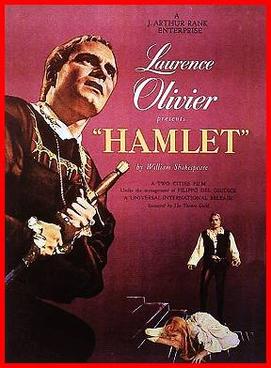
1949: Hamlet

Let's get the obvious joke out of the way. This scriptwriter is going places.

I was in Hamlet in sixth grade. It was, of course, an abridged version. But it still had all of the greatest hits attached to it. I played Polonius.  We also read it in Senior year. While this doesn't make me an expert on the play, I understood what was going on in the movie well enough.

Before watching, I was very curious as to why Hamlet would win Best Picture. Was there going to be something new that Sir Laurence Olivier (I didn't ask him about a camera) would bring to cinema? Not that I could tell. Was there a new slant on the play? No. If anything, he cut it down to a more reasonable two and a half hours, but that doesn't scream Oscar.

If anything, I thought a couple things were rather strange. The soundtrack didn't always match what was on screen. This was especially true in a few scenes that didn't have any soundtrack. And then there were a few shots that had me scratching my head. The one that stood out the most was a shot which pans up from Ophelia lying on the steps all the way up and out of the castle to the sky then returning down and into the back of Hamlet's head.

I guess that answer as to why this won the Oscar is simple enough. It's a good story and it's well acted. Of the other movies nominated, the only one I know is The Treasure of the Sierra Madre. That's a really fun movie that I would have enjoyed watching again and writing about here.


NEXT WEEK: 1950 - All the Kings Men

Oscar Project Rankings:

  1. Casablanca (1944)
  2. It Happened One Night (1935)
  3. Gentleman's Agreement (1948)
  4. The Best Years of Our Lives (1947)
  5. All Quiet on the Western Front (1931)
  6. Rebecca (1941)
  7. Mutiny on the Bounty (1936)
  8. You Can't Take It With You (1939) 
  9. Gone With the Wind (1940) 
  10. Hamlet (1949)
  11. The Life of Emile Zola (1938)
  12. Grand Hotel (1933)
  13. Cimarron (1932)
  14. The Great Ziegfeld (1936)
  15. Broadway Melody (1930)
  16. The Lost Weekend (1946)
  17. Going My Way (1945)
  18. How Green Was My Valley (1942)
  19. Wings (1929)
  20. Mrs. Miniver (1943)
  21. Cavalcade (1934)

Saturday, September 2, 2017

1948: Gentleman's Agreement

I needed to watch this. You need to watch this. We all need to watch this.

Gentleman's Agreement is about a journalist who goes undercover as a Jew to investigate anti-semitism in post World War II New York City. 

Let me quickly mention that it's a really good movie. Gregory Peck is great. Philip Schuyler Green is a different character than Atticus Finch, which is all I really knew about him before this movie. But the different characters have the same moral compass. I was expecting to write more about that and about director Elia Kazan and his role in the McCarthy hearings. But as good as the movie is (take a look at where I ranked it at the end), it's the overall theme that is so important.

I kept thinking about how watching Gentleman's Agreement so soon after Charlottesville and the national discussion involved serendipitous timing for me. It's so relevant. But then, and perhaps it was the history teacher in me, I realized that it didn't matter that I saw it now. It was timely when it came out, of course. It was timely in the 1960s. It will be timely today, was yesterday, and will be for far too long.

After watching the previous Oscar movies, I had expectations going into the movie (my prejudice?). I knew as much as my second paragraph above and nothing more. I had an image in my head of what this movie was going to be. They were going to call out the people who use anti-semitic words, don't hire Jews, and every other big stereotype. And they do. But they also call out those who sit back and allow it to happen.

One of the characters talks about sitting and listening to someone tell a joke filled with racist jokes. She describes how angry she was. She describes how hurt she felt. She states that she and several others felt uncomfortable. The response from the other character, who is Jewish, was simply "What did you DO?" That's all he keeps repeating. It works and gets the point across in the movie, but one that still hasn't spread.

Yes, you can absolutely watch this and replace "Jewish" with "Muslim," "immigrant," "black," "gay," or any other term that you are glad you aren't. Gentelman's Agreement discusses, though doesn't use the exact phrase, Christian Privilege. The same arguments work for White Privilege. If you are white, have heard the phrase white privilege, and still believe you don't have it, or just still don't understand it, this movie might be a good way for you to still figure it out and let it sink in.

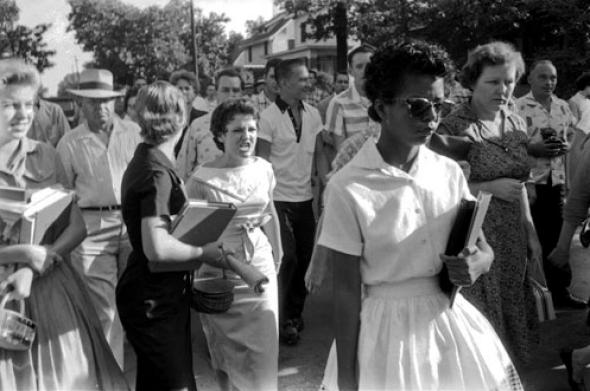
If you're still supporting 45 even after his difficulty in condemning Nazis and those sheetheads, the KKK, and people are calling you racist even though you're only supporting him because of the economy, this movie might be too much for you. That's because you're wrong. You're on the wrong side of history. Your Facebook posts are Hazel Bryan's face.

But I did use the word "might." Hazel changed. Orange Julius Caesar still has plenty of time to do irreparable damage to the nation and to your place in history. you're wrong and you're running out of time.


NEXT WEEK: 1949 - Hamlet

Oscar Project Rankings:

  1. Casablanca (1944)
  2. It Happened One Night (1935)
  3. Gentleman's Agreement (1948)
  4. The Best Years of Our Lives (1947)
  5. All Quiet on the Western Front (1931)
  6. Rebecca (1941)
  7. Mutiny on the Bounty (1936)
  8. You Can't Take It With You (1939) 
  9. Gone With the Wind (1940)
  10. The Life of Emile Zola (1938)
  11. Grand Hotel (1933)
  12. Cimarron (1932)
  13. The Great Ziegfeld (1936)
  14. Broadway Melody (1930)
  15. The Lost Weekend (1946)
  16. Going My Way (1945)
  17. How Green Was My Valley (1942)
  18. Wings (1929)
  19. Mrs. Miniver (1943)
  20. Cavalcade (1934)


Saturday, July 1, 2017

1947: The Best Years of Our Lives

The Best Years of Our Lives was number 37 on the AFI 100 Years... 100 Movies list, so I first watched it while going through that list. Watching those movies was one of my inspirations for starting this Oscar Project. I was introduced to a lot of great movies that I hadn't seen before, such as The Best Years of Our Lives. I was hoping for the same with this project, though most of the movies I've enjoyed I had already seen.

The Best Years of Our Lives starts off with a literal emotional hook that maintains through the movie. To me, that's what makes this movie work. The emotions. It never goes over the top with them.

The events that happen affect the characters and their lives. They feel happy. They feel sad. They feel angry. Excited. Love. Hate. And the situations change their lives. But nothing is ever a tragic life or death situation. Nobody is going through an emotional breakdown because of what they experience. Instead of an emotional roller coaster, it feels... like real life. And that's so appropriate because these guys had been facing real life or death situations in World War II.

Of course, many great works of art are all about taking emotions to the extreme. That's what we often love about movies and books and TV shows.  We often see that in slice of life type films, and sometimes it works. The Best Years of Our Lives isn't a slice of life movie. It isn't extreme. But it works.

Does it still hold up today? Some of the acting still feels very old fashioned and it's a bit too long. I think these two things might stop a younger audience from trying to like it. I believe it holds up much better than most of the movies I've watched in this project.

When I first watched this back in 2001 for the AFI list, I wrote that I planned to watch this again soon. I'm sorry it has taken me almost sixteen years to get to it, and I hope it won't be another sixteen.

NEXT WEEK: 1948 - Gentleman's Agreement

Oscar Project Rankings:
  1. Casablanca (1944)
  2. It Happened One Night (1935)
  3. The Best Years of Our Lives (1947)
  4. All Quiet on the Western Front (1931)
  5. Rebecca (1941)
  6. Mutiny on the Bounty (1936)
  7. You Can't Take It With You (1939) 
  8. Gone With the Wind (1940)
  9. The Life of Emile Zola (1938)
  10. Grand Hotel (1933)
  11. Cimarron (1932)
  12. The Great Ziegfeld (1936)
  13. Broadway Melody (1930)
  14. The Lost Weekend (1946)
  15. Going My Way (1945)
  16. How Green Was My Valley (1942)
  17. Wings (1929)
  18. Mrs. Miniver (1943)
  19. Cavalcade (1934)

Sunday, June 18, 2017

1946: The Lost Weekend

I'm starting to write this by looking at the list at the bottom. When this started, there were several movies that I had to sit through that drove me insane. I was really looking forward to watching Grand Hotel and Cimarron weigh down the bottom of the list. After eighteen movies, they really shouldn't remain in the top ten, and only a few places above Gone With the Wind. It looks like so many of the classic movies of the forties didn't win the Oscar.

So what was good about The Lost Weekend? It shows the dark side of alcohol (until the last two minutes, that is) and more of a reality of alcoholism. Perhaps it was one of the first to really do so.

A bartender has a pretty good line in speaking about a shot of whiskey. "One's too many and a hundred's not enough."

The best part is when the main character, Don, gets caught stealing a purse, he gets kicked out of the bar. The piano man at the bar starts to sing, "Somebody stole a purse... everybody!" and then the rest of the bar sings along as he gets kicked out. That was pretty good. I think we're probably getting pretty close to the having the technology to have similar scarlet songs follow around criminals

But I didn't care for Ray Milland. The Wikipedia article on The Lost Weekend states that "The film was intended to have no musical score, but preview audiences laughed at what they considered Milland's overwrought performance." As far as I'm concerned, the score didn't cover his Oscar winning performance enough.


NEXT WEEK: 1947 - The Best Years of Our Lives

Oscar Project Rankings:


  1. Casablanca (1944)
  2. It Happened One Night (1935)
  3. All Quiet on the Western Front (1931)
  4. Rebecca (1941)
  5. Mutiny on the Bounty (1936)
  6. You Can't Take It With You (1939) 
  7. Gone With the Wind (1940)
  8. The Life of Emile Zola (1938)
  9. Grand Hotel (1933)
  10. Cimarron (1932)
  11. The Great Ziegfeld (1936)
  12. Broadway Melody (1930)
  13. The Lost Weekend (1946)
  14. Going My Way (1945)
  15. How Green Was My Valley (1942)
  16. Wings (1929)
  17. Mrs. Miniver (1943)
  18. Cavalcade (1934)

Saturday, June 10, 2017

1945: Going My Way


It's a... nice movie. But it's not particularly interesting.

The first thirty minutes were not great. I had to stop to take a nap so that my nap wouldn't be during the next thirty minutes. But it got a bit better from there.

This movie is about a Catholic priest. One of the subplots is about him working with a bunch of boys as he turns them into a choir. It was all innocent, and I'm sure that viewers in 1944 thought nothing of it. But watching it in 2017, especially after the Oscar winner from a few years ago, Spotlight, there were some bits that are a bit cringeworthy.

Another of the subplots, one that ties in with the boys later, involves Father O'Malley's music. O'Malley, played by Bing Crosby, is a song writer. Going My Way isn't just the name of the movie but it's the name of the song he wants to sell. The funny thing is that it isn't that great of a song. In fact, that's acknowledged in the movie with the music publishers not thinking much of it either. But it's featured twice and the movie is named after it.  But then he sings another of the songs O'Malley wrote, "Swinging on a Star." It's a much more fun song, and one that has survived. So since it's a better song, how about naming the movie after that one? And feature it twice instead of the other?


One good thing about Going My Way is that it wasn't predictable. All throughout the movie I though I knew what was going to happen next and which direction the various subplots were headed. I was just about always wrong. So it's got that going for it, which is nice. I would have rather watched Double Indemnity, which was nominated. It looks like I'll get a film noir fix with the next movie.


NEXT WEEK: 1946 - The Lost Weekend

Oscar Project Rankings:


  1. Casablanca (1944)
  2. It Happened One Night (1935)
  3. All Quiet on the Western Front (1931)
  4. Rebecca (1941)
  5. Mutiny on the Bounty (1936)
  6. You Can't Take It With You (1939) 
  7. Gone With the Wind (1940)
  8. The Life of Emile Zola (1938)
  9. Grand Hotel (1933)
  10. Cimarron (1932)
  11. The Great Ziegfeld (1936)
  12. Broadway Melody (1930)
  13. Going My Way (1945)
  14. How Green Was My Valley (1942)
  15. Wings (1929)
  16. Mrs. Miniver (1943)
  17. Cavalcade (1934)

Monday, May 29, 2017

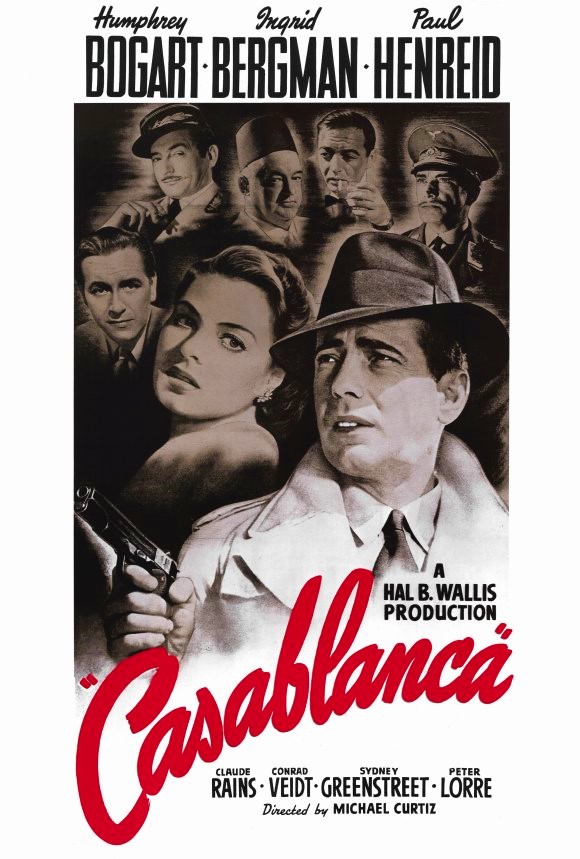
1944: Casablanca


I've seen Casablanca several times. My favorite viewing was at the Paramount Theater in Oakland a few years back. Watching it with an audience made me realize what a funny movie it is. I think that every line by Claude Rains as Captain Renault is absolutely perfect in an economy of words and delivery.

Looking through the list of Oscar movies I still need to watch, there will be very few contenders for the top spot after Casablanca. Clearly, my delay in getting to this movie had nothing to do with dread in watching it. In fact, I just watched it and I could happily pop it in again right, perhaps with one of the commentaries (Ebert's is excellent). No, I just forgot about this project for awhile.


NEXT WEEK: 1945 - Going My Way

Oscar Project Rankings:


  1. Casablanca (1944)
  2. It Happened One Night (1935)
  3. All Quiet on the Western Front (1931)
  4. Rebecca (1941)
  5. Mutiny on the Bounty (1936)
  6. You Can't Take It With You (1939) 
  7. Gone With the Wind (1940)
  8. The Life of Emile Zola (1938)
  9. Grand Hotel (1933)
  10. Cimarron (1932)
  11. The Great Ziegfeld (1936)
  12. Broadway Melody (1930)
  13. How Green Was My Valley (1942)
  14. Wings (1929)
  15. Mrs. Miniver (1943)
  16. Cavalcade (1934)

Tuesday, December 22, 2015

1943: Mrs. Miniver

If you read my write up of Rebecca, you may recall that I was not looking forward to 1941-1943. Rebecca ended up being a pleasant surprise. How Green Was My Valley ended up being what I expected. So Mrs. Miniver was the tie-breaker.

I saw a brief summary stating that it was about the beginning of World War II in England. And for a movie to win the award well over a year before D-Day, perhaps it would give an interesting perspective on the war. Was there a chance that I could be wrong again? Is there a chance that Mrs. Miniver could win me over?

Nope. 

NEXT WEEK: 1944 - Casablanca

Oscar Project Rankings:

  1. It Happened One Night (1935)
  2. All Quiet on the Western Front (1931)
  3. Rebecca (1941)
  4. Mutiny on the Bounty (1936)
  5. You Can't Take It With You (1939) 
  6. Gone With the Wind (1940)
  7. The Life of Emile Zola (1938)
  8. Grand Hotel (1933)
  9. Cimarron (1932)
  10. The Great Ziegfeld (1936)
  11. Broadway Melody (1930)
  12. How Green Was My Valley (1942)
  13. Wings (1929)
  14. Mrs. Miniver (1943)
  15. Cavalcade (1934)

Sunday, December 13, 2015

1942: How Green Was My Valley

I'm not sure how much I have to say about How Green Was My Valley. It's the story of a family. The family has a few different stories. Any one of those stories could have been fleshed out into interesting stories. Instead, we smaller, less interesting stories that are all tied together.

In summary, it's not my kind of movie.

So this is one of those years in which you have to take a look at the competition. The 1942 awards are viewed much like the 1999 awards. The wrong movie won. Looking back, Saving Private Ryan absolutely should have won the award instead of Shakespeare in Love. Looking back, Citizen Kane absolutely should have won the award instead of How Green Was My Valley.

I guess I'll throw a quick shout out to my favorite part of the movie. When young Roddy McDowell goes to school, he needs a boxer to teach him to fight. They call on Dai Bando to teach him. It's probably just my favorite part because this week is leading up to The Force Awakens. Dai Bando sounds like an old Jedi Master name.

Unlike the pleasant surprise of Rebecca last week, I doubt I'll return to this valley.

NEXT WEEK: 1943 - Mrs. Miniver

Oscar Project Rankings:

  1. It Happened One Night (1935)
  2. All Quiet on the Western Front (1931)
  3. Rebecca (1941)
  4. Mutiny on the Bounty (1936)
  5. You Can't Take It With You (1939) 
  6. Gone With the Wind (1940)
  7. The Life of Emile Zola (1938)
  8. Grand Hotel (1933)
  9. Cimarron (1932)
  10. The Great Ziegfeld (1936)
  11. Broadway Melody (1930)
  12. How Green Was My Valley (1942)
  13. Wings (1929)
  14. Cavalcade (1934)

Sunday, December 6, 2015

1941: Rebecca

"Are you fond of dancing?"
"I love it, but I'm not very good at it."
"Do you Rhumba?"
"I've never tried."
"You must teach me."

That particular exchange is part of a very nicely written dinner conversation that I rather enjoyed in Rebecca. It was the first thing that I really liked about the movie. Unfortunately, it doesn't happen until almost 45 minutes into the movie. 

Rebecca is the first in a stretch of three movies that I really wasn't looking forward to when I started the project. I noticed that Gone With the Wind was right before them, and they looked like movies that would be in a similar to that. For me, at least GWTW has its history tie in. But all three felt very Wuthering Heights-like to me - classics, but definitely not meant for me.

I must admit that I knew very little other than the title. It's about a woman named Rebecca. OK.  I also had seen the poster, which is shown above. Apparently this Rebecca woman is in love with Sir Laurence Olivier. So... boring?

Speaking of Olivier, I also wasn't too familiar with him. I have certainly heard of him. If I met him, I would know to ask him about a camera. I also knew he was well known for his legendary Shakespearean acting. In fact, I'll see his Hamlet as it was the 1949 Oscar winner. The only think I had actually seen of him was his role as Zeus in Clash of the Titans. I learned from him to find and fulfill my destiny. But it's a relatively small role.

There was one thing, however, that stood out about Rebecca. With overwhelming evidence pointing me toward not enjoying the movie, there was one hint that I could be wrong. There is another name on that poster that I recognize. The director. Alfred Hitchcock. That has to be worth something, right?

Right at the beginning of the movie, we get a could hints of Hitchcock. We walk through a spooky gate toward a spooky, dilapidated mansion. And in the next scene, Olivier is looking down a cliff in a shot that has an immediate sense of suspense. The shot also visually foreshadows Vertigo.

But then the movie slowed down. It felt mostly as simple as a whirlwind romance in the French Riviera can. Great for those involved, but not so exciting to watch. Since Gone with the Wind, was the previous movie on the list, I had just skimmed my write up that. It was bringing up memories of that. I'm not sure if I made it clear or not in that writeup, , but GWTW is SO DAMNED LONG. I was worried that this was going to feel like a repeat.

I did get to learn early on that the woman in the poster isn't Rebecca. Rebecca is the dead wife of Olivier's Maxim de Winter. So I guess that's actually her in the lower left. The woman played by Joan Fontaine is the new Mrs. de Winter. And I call her that because that's the only name given to her in the movie. This decision is clearly to emphasize that the movie is about the new Mrs. de Winter trying to live up to former and deceased Mrs. de Winter. Other than the exchange that I started with, I didn't love too much about that particular idea. Luckily for me, that's only what the first half of the movie is about.

In my write up of Grand Hotel, I noted that I wanted to avoid spoilers. It seems silly that I needed to do so for a movie that is 83 years old. With Rebecca now 75 years old, I wonder if I need to do the same. If so, if you're planning to watch it yourself, you should probably skip the rest of it. Just note that I really, really liked the rest of the movie, and it made everything about the first half work. Even though I'm not going to spoil exactly what happens, just know the basic idea of the second half ahead of time could make it less interesting.

That was your warning. Rebecca is actually a thriller. What really happened to Rebecca? How did she really die? Who was responsible? Who knew? What did they know? What did they think they knew? The costume ball scene looks like it's going to take you even further in the direction you thought you were going in. It looks like the comparison and competition between the new and old Mrs. de Winter will come to a head. It instead leads us to the heart of the mystery. You discover that the suspense has been building the whole time, but not to what you thought it would. 

This is truly laying the foundation for later Hitchcock films. I already mentioned Vertigo, and you will also get a feel for Norman Bates in Psycho whenever the housekeeper, Mrs. Danvers, is on the screen. And that goes double for her final scene. Watching Rebecca didn't just remind me to watch more Oscar winning movies. It reminded me to watch more Hitchcock.

If you want to appreciate the beauty of black and white movies, look at the interior scenes. The exterior scenes often look like bad green screen, as the backgrounds are not often lit as well as they could. But the interiors are great. I watched this in a rip from a DVD. I would like to watch the remastered Blu Ray version for my next viewing. I think more sharpness and clarity than what I already saw would be beautiful.

And yes, I'll watch it again. I would like to rewatch the first half with the second half in mind. I want to be able to pay more attention to the dialogue. I want to look more carefully at the early scenes to see what hints of the second half I can find. I have a feeling that many of them will be in the acting of Laurence Olivier. So if you kept reading this far and spoiled a bit of the movie for yourself, don't feel too bad.

NEXT WEEK: 1942 - How Green Was My Valley

Oscar Project Rankings:

  1. It Happened One Night (1935)
  2. All Quiet on the Western Front (1931)
  3. Rebecca (1941)
  4. Mutiny on the Bounty (1936)
  5. You Can't Take It With You (1939) 
  6. Gone With the Wind (1940)
  7. The Life of Emile Zola (1938)
  8. Grand Hotel (1933)
  9. Cimarron (1932)
  10. The Great Ziegfeld (1936)
  11. Broadway Melody (1930)
  12. Wings (1929)
  13. Cavalcade (1934)

Wednesday, October 1, 2014

1940: Gone With the Wind

I made it through eleven movies before this extended break. The plan was to watch a movie a week. How difficult would that be? Throw in the summertime to make up for a few missed weeks and I would finish in about a year and a half. But right from the beginning, I knew there was a movie coming. I knew there was a movie that I was going to have to force myself to watch again. What's the big deal? It's just SO DAMNED LONG.

I watched Gone With the Wind for the first time when I watched all 100 of the AFI top 100 movies. I believe I split it into two days, breaking at the intermission. And still, with two different two hour chunks, it felt incredibly long. I knew that I was either going to have to split it into smaller chunks and watch it scene by scene or just force myself to sit down and watch it straight through. So I put it off and put it off and put it off. Why? It's SO DAMNED LONG.

Thank Cinemark for bringing me back to the Oscar Project. They show a weekly classic movie. When I saw that they would show Gone With the Wind, I thought it might be an opportunity to give it a shot. I have a much easier time watching longer movies in the theater. You just can't quit on a movie in the theater (unless it's so incredibly bad (Abraham Lincoln: Vampire Hunter, since we're discussing Civil War movies)). So I went, and here I am. First thought? It's SO DAMNED LONG.

There are a bunch of great things about the movie. There are several beautiful shots of the characters, usually Scarlett, silhouetted against and orange sky. They were even more incredible on such a large screen. The music is great; I'm still whistling the theme. Every time Vivien Leigh and Clark Gable are on screen, they are terrific. Since just about every one of Rhett's scenes are with Scarlett, that means he's always brilliant. That goes double for the final scene where he, frankly, no longer gives a damn. But the final scene is also great because the movie it over. You see, it's a four hour movie. I don't know if I've yet expressed that it's SO DAMNED LONG.

When I was thinking ahead to writing this, I was planning on writing about how it clearly didn't deserve the Oscar. In 1940 it was up against Mr. Smith Goes to Washington, Stagecoach, Of Mice and Men, to name a few. And there's one more movie - The Wizard of Oz. Yes, Wizard should have won. I would rather rewatch all of those other movies than to rewatch Gone With the Wind. But that's mostly because those are reasonably lengthed movies which this one is SO DAMNED LONG.

But after this second viewing, and especially seeing it in a theater, I get it a little more. Sure, it's incredibly racist. Yes, Scarlett is a horrible, horrible person. Yes, it gets rather... rapey. But it really is an epic film. It's a BIG movie in ways other than it's four hour run time. I just wish it wasn't SO DAMNED LONG!

NEXT WEEK: 1941 - Rebecca

Oscar Project Rankings:
  1. It Happened One Night (1935)
  2. All Quiet on the Western Front (1931)
  3. Mutiny on the Bounty (1936)
  4. You Can't Take It With You (1939) 
  5. Gone With the Wind (1940)
  6. The Life of Emile Zola (1938)
  7. Grand Hotel (1933)
  8. Cimarron (1932)
  9. The Great Ziegfeld (1936)
  10. Broadway Melody (1930)
  11. Wings (1929)
  12. Cavalcade (1934)

Sunday, July 15, 2012

1939: You Can't Take It With You

I was looking forward to You Can't Take It With You. I enjoy Frank Capra movies. I enjoy Jimmy Stewart movies. I enjoy Frank Capra's movies with Jimmy Stewart.  The problem is that I fell asleep about 15 minutes in.

Knowing that I wasn't particularly tired, I blamed it on the movie. I'm a very light sleeper, and I usually have a difficult time falling asleep (though it's not unheard of that I'll doze off while watching TV or a movie.) So something was a bit off. I knew I had to try again, but something was going to need to change.

You see, the picture and sound quality aren't great. You Can't Take It With You is in dire need of a clean up. The picture is overly grainy and slowly flickers between light and dark. And the dialogue isn't clear. I lost focus on what they were saying, and that turned the movie into white noise. I always sleep with white noise. And the picture became the video version with its hypnotic slow flicker.

So take two. I turned on the captions. The first thing it did is put bright yellow, but constant, words on the screen. It broke the video monotony. And of course reading the words made sure I understood exactly what was being said. It also forced me to pay attention.

The funny thing is that I should have thought of that idea right away. Whenever I showed a movie in class (Almost Heroes and Glory - and that's an important reason why I stopped showing the edited version of Glory. It wasn't captioned), I show it with the captions. Partially this is for any deaf students I might have. But I also understand that having words on the screen helps with comprehension. And I was the one who needed this particular accommodation today.

So what about the movie? It's pretty darned good. I think I enjoy It Happened Last Night and Mr. Smith Goes to Washington more, but it might be close to It's a Wonderful Life for me. Being a Capra movie, the ending was predictable from the first few minutes, but it takes plenty of fun turns along the way. It certainly doesn't get to that point in the way I expected.

Of the Capra movies, it might be the best representation of the 30's. All the way through, I was considering how it would work to show in a junior year history class. Since I'm teaching four of those next year, I think it could work to teach a few things.

NEXT WEEK: 1940 - Gone With the Wind

Oscar Project Rankings:
  1. It Happened One Night (1935)
  2. All Quiet on the Western Front (1931)
  3. Mutiny on the Bounty (1936)
  4. You Can't Take It With You (1939)
  5. The Life of Emile Zola (1938)
  6. Grand Hotel (1933)
  7. Cimarron (1932)
  8. The Great Ziegfeld (1936)
  9. Broadway Melody (1930)
  10. Wings (1929)
  11. Cavalcade (1934)

Sunday, July 1, 2012

1938: The Life of Emile Zola

The Life of Emile Zola is a slightly misleading title. This is really the story of the Dreyfus affair told from the point of view of writer Emile Zola with a long introduction showing key points in his career. I really mention that less as a nitpick about the title, as titles are allowed to be ambigous and/or misleading (I'm looking at you, Naked Lunch). I point that out more because the movie really takes off when we gt to the Dreyfus affair.

I first became familiar with the Dreyfus affair after seeing it as a favorite subject of several questions and answers on Jeopardy. French Captain Alfred Dreyfus was wrongly accused, tries and convicted of treason. When evidence of his innocence was discovered, it was covered by higher ups in the French army, prompting many French intellectuals, including Emile Zola, to get involved.

The first part of the movie, actually showing the life of Emile Zola, moves quickly enough, as it is a series of short scenes that outlines his writing career. But there's nothing too interesting, save for his friendship with painter Paul Cézanne and a few lines about fighting for the people, likely taken from his own writings. I found myself mentally drifting away during that first part, but as I mentioned before, the movie really takes off when the Dreyfus affair begins. The scenes when Emile Zola is on trial are the most dramatic and best of the movie and made it well worth watching.

NEXT WEEK: 1939 - You Can't Take it With You

Oscar Project Rankings:
  1. It Happened One Night (1935)
  2. All Quiet on the Western Front (1931)
  3. Mutiny on the Bounty (1936)
  4. The Life of Emile Zola (1938)
  5. Grand Hotel (1933)
  6. Cimarron (1932)
  7. The Great Ziegfeld (1936)
  8. Broadway Melody (1930)
  9. Wings (1929)
  10. Cavalcade (1933)

Sunday, June 17, 2012

1937: The Great Ziegfeld

The Great Ziegfeld tells the story of the career of Broadway producer Florence Ziegfeld. His career is a series of ups and downs. Every time he gets a hit or tastes success, he loses it only to have to build up again. For example, when he gets rich in 1929, he decides that it's time to play it safe and put all of his money into the stock market. Click the link on the year if you don't know why that's a bad idea. He usually gets his money back from The Wizard of Oz.

Ziegfeld is less of a producer and more of a used car salesman. He tricks and manipulates those around him. I can see how in 1936 when this came out that he might have been a different lead character than people had seen in a movie. But these days, we've seen that act done before and done much better. Still, kudos for doing it early on.

After the first 45 minutes, the majority of the rest of the 185 minute movie is musical numbers from Ziegfeld's various Broadway shows, especially his Follies. I was reminded of the second Oscar winner, The Broadway Melody. And I was as uninterested in this as I was in that.

The highlight of the movie is easily a scene with Ray Bolger. I've embedded it below. It's pretty much his audition for the part of The Scarecrow. Though in his first scene, it's almost confusing when he talks about not having a heart. The real fun starts about a minute in, and the really impressive part starts around 2:20.


Update: It's no longer available on YouTube. So... search for other Ray Bolger stuff. It's good.

NEXT WEEK: 1938 - The Life of Emile Zola

Oscar Project Rankings:
  1. It Happened One Night (1935)
  2. All Quiet on the Western Front (1931)
  3. Mutiny on the Bounty (1936)
  4. Grand Hotel (1933)
  5. Cimarron (1932)
  6. The Great Ziegfeld (1936)
  7. Broadway Melody (1930)
  8. Wings (1929)
  9. Cavalcade (1933)

Sunday, June 10, 2012

1936: Mutiny on the Bounty

While watching these older movies, I often wonder what it would be like if it were made in modern times. The story of the mutiny has been told several times. In fact, the 1936 Oscar winning version was the third of five movies. But it's the only one I have seen, so I wonder if what I'm about to write it true of any of the others.

The voyage of the Bounty is an interesting story, and the mutiny itself is probably least interesting. In Mutiny on the Bounty, it takes about two minutes of screen time, and that's about all that's needed. I believe that if it were made today, the mutiny would be almost the entire movie. It would probably be filmed with extra shaky cam and featuring impromptu martial arts displays from the various mutineers. The size of the interior of the ship would be filled with endless hiding places and individual set pieces.

Mutiny on the Bounty is too long at 132 minutes, but it still moves along well enough. As I mentioned, the mutiny itself is done quickly, and is almost the only action piece, minus a threatening storm or two. The story moves along with the slowly building tension between Captain Bligh and the others. Once we finally get to the mutiny, it makes sense. It works. We even wish it had happened earlier. I think that would be missing from a modern version.

For the second week in a row, I can write that Clark Gable is great in this. And he plays a different character than in It Happened One Night. His acting range is pretty darned good, especially for the mid 1930s, when much of the acting is overmelodramatic, if such a thing is possible. I'll see Gable again in a few weeks, but he won't give a damn.

And what about Captain Blight?  Some quick research shows that the movie character wasn't much like the reality. The real cause of the mutiny probably wasn't the same as in the movie, and isn't really clear. But we're talking about the movie.

What he really such a horrible guy? Did he deserve the mutiny? Well as I mentioned, we understand when it gets to that point. But I don't think he's so evil as he is just a dumb guy with too much power. The movie makes the point that he was a brilliant Captain. The voyage was a difficult one that he made much easier with his mad skills. And most of his decisions are made with the voyage, as well as King and County, in mind. The problem is that he isn't smart enough to the take the best path, only the one prescribed to him. So did he deserve the mutiny? No, but the men who did deserved to mutiny, and in the end that's all that matters.
 
P.S. Just before publishing this, I remembered that since I had watched Mutiny on the Bounty as one of the AFT Top 100 movies, I had already written a bit about it. I went to check it out. As it turns out, My opinion remained almost identical, just with fewer words. Here it it:

March 28, 2004 - Mutiny marks movie #100 for me - the last movie to watch... Overall a good movie. At over two hours, it moved along well enough without rushing to the mutiny itself. I think that if it were made today, the mutiny would have started about 45 minutes in - and then taken up another 45 minutes worth of special effects to actually do it.


NEXT WEEK: 1937 - The Great Ziegfeld

Oscar Project Rankings:
  1. It Happened One Night (1935)
  2. All Quiet on the Western Front (1931)
  3. Mutiny on the Bounty (1936)
  4. Grand Hotel (1933)
  5. Cimarron (1932)
  6. Broadway Melody (1930)
  7. Wings (1929)
  8. Cavalcade (1933)

Sunday, June 3, 2012

1935: It Happened One Night

I recently had a brief conversation about It's a Wonderful Life. I mentioned that it was a pretty good movie, but that it wasn't even Frank Capra's best movie. I prefer both Mr. Smith Goes To Washington and this movie, It Happened One Night. I should note that I've never seen You Can't Take it With You, but I soon will for this very column.

It Happened One Night is filled with snappy dialogue, delivered by the deliciously smarmy Clark Gable. Those scenes are all the better when shared by Claudette Colbert. At 105 minutes, it's just about the perfect length for a movie, and the great scenes give it forward momentum almost all the way through. The last twenty minutes, however, takes a bit too long to reach it's conclusion. The conclusion is obvious and satisfying, however, so it works well enough.

While the dialogue makes the movie good, a few bright scenes makes it great. Clark Gable does a memorable strip tease (even the most homophobic of you can handle it). Gable and Colbert's attempt at hitchhiking has been repeated and parodied enough.  Gable's carrot eating in the scene even inspired a certain cartoon rabbit, as does a minor character's repeated use of the word "Doc" elsewhere in the movie. I'm embedding the scene below. In the last couple frames, you might recognize the driver. That's both Little John and the Skipper's dad.


My absolute favorite scene, however, is a sing-a-long on the bus. A group of musicians suddenly appear on the back of the bus, and soon everyone is singing "The Daring Young Man on the Flying Trapeze."  Different passengers, none of whom we have previously seen or will see again, take a different verse. The entire bus, Gable and Colbert featured, sing along with the chorus. It doesn't make a great deal of sense, though it does lead to the next plot point (featuring the exterior of a totally different bus and driver crashing into a ditch). But it's a few minutes of pure cinematic joy.

NEXT WEEK: 1936 - Mutiny on the Bounty


Oscar Project Rankings:

1. It Happened One Night (1935)
2. All Quiet on the Western Front (1931)
3. Grand Hotel (1933)
4. Cimarron (1932)
5. Broadway Melody (1930)
6. Wings (1929)
7. Cavalcade (1933)

Saturday, May 26, 2012

1934: Cavalcade

Cavalcade is the movie that I blame for stopping the Oscar Project the first time around. The reason has almost nothing to do with the movie itself. It's that it's not easily available. I found a lousy torrent of it, complete with Spanish subtitles and lousy sound. I realized after a few minutes that I had to rely on my sparse Spanish skills to understand some of the sentences. I stopped watching, and the Project found itself unofficially suspended. I threatened to continue a couple times under the assumption that I could find a cleaner version of Cavalcade, or just pass it by. I couldn't do either. Today, I'm forcing myself to sit down and watch the crappy sound/Spanish subtitled version.


It's definitely not the most exciting movie ever. Cavalcade tells the story of an English family over the course of 30+ years. Starting with New Years Eve 1899, the family patriarch is about to go off to Africa to fight in the Boer War. Expectations are that he will return changed or not at all. A few months later, he's back, and it doesn't seem to have changed him at all. I guess I missed the significance of that.

Years later his son falls in love. He and his new wife go on a cruise for their honeymoon. The date on the screen is April 14, 1912. If you know your historical dates (or James Cameron movies), you know it won't end well. Then World War I happens in a Captain America/WWII style montage. And then some other stuff happened that I didn't pay attention to.

Definitely not worth the wait. Even though it's been a couple years since I watched the first movies, I'm pretty sure that Cavalcade is definitely my least favorite movie of The Project so far. You can check the "Oscar Project" labels on the blog posts to find those. I hope I'm back on track with this thing. If I actually do, I'll be watching the Oscar winner from this year in December of 2013. The next movie, It Happened One Night, I've already seen. It's fantastic, so I know I'll enjoy rewatching it.

Friday, July 16, 2010

1933: Grand Hotel

Grand Hotel feels like it's going to be less than it is.  During the first hour I got the feeling that the characters were going to go though a few things. They would learn about each other and grow as characters as the movie progresses, and then the movie ends.  But I was surprised.

This movie is actually building to something happening. Today we would call it a twist, though I hesitate to classify it in the same way. I won't give it away because today we would call that a spoiler. 

There are a couple themes in the movie that I noticed. The first is about money and how it affects people is such different ways. Some have it and don't know what to do with it. Some have it and want more. Some don't have it. That changes how each person acts in the movie as it interweaves the stories of the different characters.

The second theme is about life passing you by. About life continuing without you. The end of the movie (and this isn't a spoiler, I don't think) shows new people checking into the hotel. The staff is moving along to a new day. And the doctor, who waits in the lobby for something to happen )though most of the action takes place upstairs), states, "Grand Hotel. People come and go. Nothing ever happens."

For the first part of the movie, I was trying to think of who Joan Crawford reminded me of.   Not only her looks, but her facial mannerisms brought to my mind Kate Winslet. A quick Google search shows that Winslet is going to be playing a role that Crawford originally played in a remake of Mildred Pierce (a movie I haven't seen).

For my criticisms, Grand Hotel feels very much like a play. In fact the opening scene in the hotel lobby is a series of very long takes. I originally thought it might have been one ten minute take, but it looks like there were a couple edits. Much like the previous Oscar winners, everyone is acting to the balcony seats. Everyone is too close of a talker for me to handle. Thank goodness for widescreen these days so that two people can fit in one frame comfortably.  The music wasn't scored, but was simply music played over the dialogue. For example, the opening scene we hear the Blue Danube waltz by Strauss. And in a few scenes the music didn't fit. But at some point, the music stopped. I didn't notice it until one of the characters actually said that the music stopped. It was an effective moment.

This is the first of the Oscar winners that I think I might watch again someday (unless I end up teaching a class that shows All Quiet on the Western Front). I can't recommend it to the casual movie goer. But for someone who appreciates movies, there's some history here. Grand Hotel shows how you can have a movie about several different characters while their stories overlap and come together at the end. And we've definitely seen many of that type since then. In fact, one name for this type of movie is a "grand hotel" film.